Corten
Corten Steel Laser Cutting — Complete Guide to Rust Patina Panels
Everything you need to cut Corten weathering steel with fiber laser or plasma. Settings, patina timing, installation, sealing options, and pricing for premium outdoor panels.
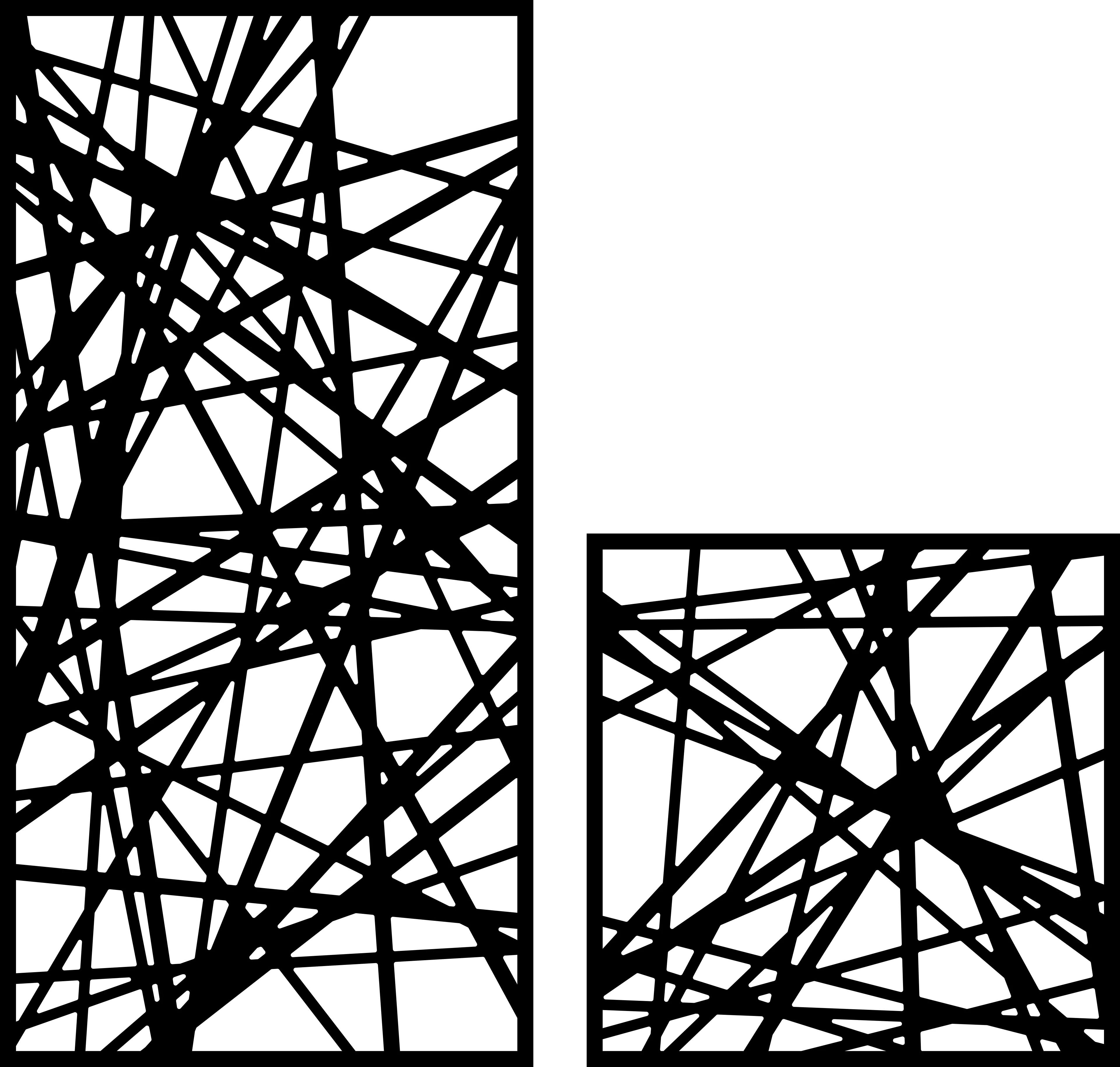
Corten steel — technically “weathering steel,” originally trademarked as COR-TEN by U.S. Steel — is the premium outdoor material of modern architecture. Its intentional rust patina turns raw industrial material into warm architectural feature. Every serious modern home has at least one Corten element: privacy screen, planter, house sign, entry canopy.
If you own a fiber laser or plasma cutter and you’re not yet cutting Corten, you’re leaving the highest-margin outdoor product category on the table. This guide covers everything: what makes it different, cutting settings, patina timing, install rules, and pricing for premium panels.
What is Corten steel actually?
Corten is carbon steel with added copper, chromium, nickel, and phosphorus (typically 0.2-0.5% each). Those alloying elements produce a specific type of rust that:
- Self-limits. Standard mild steel rusts progressively deeper. Corten’s initial oxide layer densifies and slows further oxidation.
- Adheres tightly. Standard rust flakes off. Corten’s oxide layer bonds to the underlying metal.
- Provides UV protection. The dark patina absorbs UV and protects the substrate.
- Reads as warm brown, not the orange of standard rust — the visual difference comes from the specific mineral composition of the oxide layer.
Result: Corten weathers to a stable rust color over 6-24 months, then holds that appearance for 50-80+ years with zero maintenance.
Corten grades — which to buy
Common commercial grades:
| Grade | Standard | Notes |
|---|---|---|
| ASTM A588 | US structural spec | Common structural grade, weathers well |
| ASTM A606 | US sheet spec | Sheet metal fabrication (what you want for panels) |
| EN 10025-5 (S355J0WP) | European spec | Equivalent to A588 |
| S355J2W | European sheet spec | Sheet metal for architectural use |
For laser/plasma cutting panels: buy ASTM A606 or S355J2W in 2-6mm sheet form. These are the sheet-metal versions specifically formulated for fabrication.
Cutting Corten with fiber laser
The good news: Corten cuts virtually identically to mild steel of the same thickness. Same laser wavelength absorption, same speed, same settings. Whatever settings you use for mild steel at a given thickness, Corten will match within 5%.
Reference settings (from our fiber laser guide):
1.5 kW fiber laser on Corten:
| Thickness | Gas | Pressure (bar) | Speed (mm/min) | Power (%) |
|---|---|---|---|---|
| 2 mm | O₂ | 0.5 | 5,500 – 6,500 | 95 |
| 3 mm | O₂ | 0.4 | 3,800 – 4,500 | 100 |
| 4 mm | O₂ | 0.35 | 2,500 – 3,000 | 100 |
| 6 mm | O₂ | 0.25 | 1,200 – 1,500 | 100 |
3 kW fiber laser on Corten:
| Thickness | Gas | Pressure (bar) | Speed (mm/min) | Power (%) |
|---|---|---|---|---|
| 3 mm | O₂ | 0.4 | 7,500 – 8,500 | 95 |
| 6 mm | O₂ | 0.3 | 2,800 – 3,300 | 100 |
| 10 mm | O₂ | 0.2 | 1,200 – 1,500 | 100 |
Special note: you may want to use NITROGEN instead of oxygen on Corten if the panel will be sealed clear-coated later. O₂ creates a thin oxide layer immediately at cut which can interfere with clear coat adhesion. N₂ leaves a clean edge for coating.
Cutting Corten with plasma
For thicker panels (6mm+) or budget setups, plasma is 100% viable:
| Thickness | Amps | Speed (mm/min) | Notes |
|---|---|---|---|
| 3 mm | 45 A | 3,500 | Sharp edge, minor bevel |
| 6 mm | 45 A | 2,000 | Standard cut |
| 12 mm | 105 A | 1,500 | Long-standing structural use |
| 20 mm | 130 A | 800 | Post & beam construction |
The patina — how it develops
Understanding patina timing is critical for setting client expectations.
Timeline (approximate for temperate climate):
- Days 0-3: Freshly cut appearance. Metallic silver-grey.
- Week 1: Light orange-brown haze begins forming.
- Weeks 2-4: Uneven patina spots. Looks blotchy.
- Months 2-3: More uniform coverage. Still active oxidation.
- Months 4-6: Deep uniform rust brown color develops.
- Months 6-12: Patina stabilises. Color deepens slightly.
- Year 2+: Fully stabilised patina. Minimal further change.
Climate matters:
- Coastal/humid: Faster patina (3-6 months to full color)
- Dry inland: Slower patina (12-18 months to full color)
- Extreme dry desert: Patina may take 2+ years, may need artificial acceleration
Accelerating the patina
Clients don’t want to wait 6 months to see the finished look. Options to speed up:
Option 1 — Natural water exposure
- Spray with water every 3-4 hours during first week
- Let dry between applications
- Accelerates from 3-6 months to 3-4 weeks
Option 2 — Salt water accelerator
- 1 tbsp salt per 500 ml water in spray bottle
- Spray daily for 5-7 days
- Warning: uneven application = uneven patina. Practice on scrap first.
Option 3 — Commercial rust accelerator
- Products like “Rustol” or “Modern Masters Metal Effects Rust Activator”
- Follow product instructions
- Fastest option (24-72 hours to full patina)
Option 4 — Vinegar accelerator (DIY)
- 5% white vinegar + 1 tsp salt per 500 ml water
- Spray daily for 3-5 days
- Middle-ground speed and predictability
Installation critical rules
Corten panels have some specific install requirements that regular steel doesn’t:
1. Never trap water behind the panel. Corten NEEDS airflow to develop stable patina. Mount minimum 20 mm from wall with visible air gap. Panels flat-mounted to walls develop patchy patina.
2. Runoff staining IS real. For the first 12-18 months, rust runoff will stain concrete, stone, or lighter substrates below the panel. Solutions:
- Install drip line/gutter below panel
- Use dark-colored substrate below panel (won’t show staining)
- Accept the staining as part of the “aging” aesthetic (some designers embrace it)
3. Never combine with aluminum without isolation. Galvanic corrosion between Corten and aluminum destroys the aluminum FAST. Rubber isolators between all Corten-aluminum contact points.
4. Frame with stainless or matched steel. Non-Corten steel frames rust ORANGE (not brown). Aesthetic mismatch. Use stainless for framing OR use matching Corten for framing.
5. Fasteners: stainless only. Same rule. Non-stainless fasteners will rust visibly against the Corten panel. Use A2 or A4 stainless (A4 for coastal).
Sealing options (if the client wants stability sooner)
Corten looks best with fully developed natural patina, but some clients want immediate stability. Options:
Option 1 — Waxing (least invasive)
- Renaissance Wax after natural patina forms
- Preserves color, slows further weathering
- Requires reapplication every 2-3 years
- Best for: interior applications, indoor-outdoor transitions
Option 2 — Clear lacquer (mid-invasive)
- Permalac clear applied AFTER 3-6 months natural patina
- Locks in color for 5-10 years
- May yellow slightly outdoors
- Best for: signage, sculpture, permanent installations
Option 3 — Powder coat clear (most invasive)
- Panel powder-coated with clear TGIC-free coating
- Locks patina permanently
- Slight texture change
- Best for: gates and high-touch surfaces
Pricing Corten work
Corten costs 40-80% MORE than standard mild steel per square metre. Price your finished work accordingly:
Material cost baseline (2026 US):
- 3 mm Corten: $180-240/m²
- 6 mm Corten: $320-450/m²
- 10 mm Corten: $520-720/m²
Compare to mild steel:
- 3 mm mild steel: $85-120/m²
- 6 mm mild steel: $160-220/m²
Retail pricing formula for finished Corten panel:
Retail = (Material × 3.5) + Labour + FinishingReal example: 800 × 600 mm privacy screen in 3 mm Corten:
- Material: $95
- Cutting labour (30 min): $15
- Deburring + prep: $10
- Retail: $95 × 3.5 + $25 = $358
Compare to same design in mild steel: $155 retail. Corten commands 2.3x price for essentially same fabrication effort.
Design considerations for Corten
Some design patterns work BETTER on Corten than on painted steel:
Strong contrast designs: Deep patina reads as high-contrast dark. Designs with big bold outlines pop dramatically. Delicate wispy designs get lost in the color.
Recommendations from DXFForge catalogue:
- Modern Cutting Pattern 15 — bold geometric works stunning in Corten
- Foliage Screen 09 — natural botanical + natural patina = perfect pairing
- Wrought-Iron Style Panel 03 — heritage aesthetic amplified by rust texture
- Geometric Composition 28 — clean geometric contrasts against warm patina
Skip on Corten:
- Very fine detail (< 3 mm features) — gets lost in the patina texture
- Symbols/logos meant to be legible from distance — patina reduces contrast
- Anything requiring specific color matching — patina varies too much
Where to source Corten
United States:
- Metals Depot — standard sheets, 2 mm through 12 mm
- Online Metals — smaller quantities, higher unit cost
- Local steel service centers — best price for volume, often minimum orders
Europe:
- Local steel merchants stock S355J2W
- Alko Steel, Vinox, Corus — major suppliers
Australia:
- BlueScope — original manufacturer, wide availability
- REM Steel — smaller quantities
Prices vary 30-50% between suppliers for identical grade — call around.
Combining Corten with DXFForge designs
Every DXFForge design cuts identically on Corten as on mild steel — no special file modifications needed. If your existing settings work for 3 mm mild steel, they work for 3 mm Corten.
Best-suited designs from the DXFForge catalogue for Corten applications:
- Bold geometric patterns (2-3 mm feature detail minimum)
- Botanical outlines (avoid tiny fine leaves)
- Sculptural abstract shapes
- Wrought-iron style ornamental (heritage aesthetic)
Browse the full catalogue or grab the Full Access Bundle at $49.99 for 108+ designs — many optimised for Corten’s specific aesthetic requirements.
TL;DR
- Corten cuts identically to mild steel — same settings, same speed
- Patina develops 6-12 months naturally, 3-7 days with accelerator
- Requires airflow behind panel — mount with 20mm air gap
- Costs 40-80% more than mild steel; retails at 2.2-2.5x mild steel finished
- Best for: privacy screens, gates, house signs, garden art, modern architectural details
- Skip for: very fine detail, high-contrast signage, indoor installations
Once you dial in Corten, it becomes your premium outdoor line. The material tells the aesthetic story on its own — your design just needs to be substantial enough to pair with it.
Designs mentioned in this article


More articles
House Signs
10 Best DXF Designs for Modern House Signs & Address Plaques
Curated list of the 10 best DXF designs for house signs and address number plaques. Modern styles, material recommendations, install tips. Ready to cut on fiber laser or plasma.
June 8, 2026
Wall Clocks
10 Best DXF Designs for Metal Wall Clocks (Laser & Plasma Cut)
Discover the 10 best DXF wall clock designs for laser and plasma cutting, plus motor sizing, hole specs, and material tips to sell them fast.
August 27, 2026
Design Roundup
10 Best DXF Designs for Modern Fence Panels (Fiber Laser & Plasma)
Hand-picked DXF designs that look stunning as decorative fence inserts. Cut on fiber laser or plasma in 2-3 mm steel, no rescaling needed, ready in 30 minutes.
May 24, 2026