Design Roundup
10 Best DXF Designs for Modern Fence Panels (Fiber Laser & Plasma)
Hand-picked DXF designs that look stunning as decorative fence inserts. Cut on fiber laser or plasma in 2-3 mm steel, no rescaling needed, ready in 30 minutes.
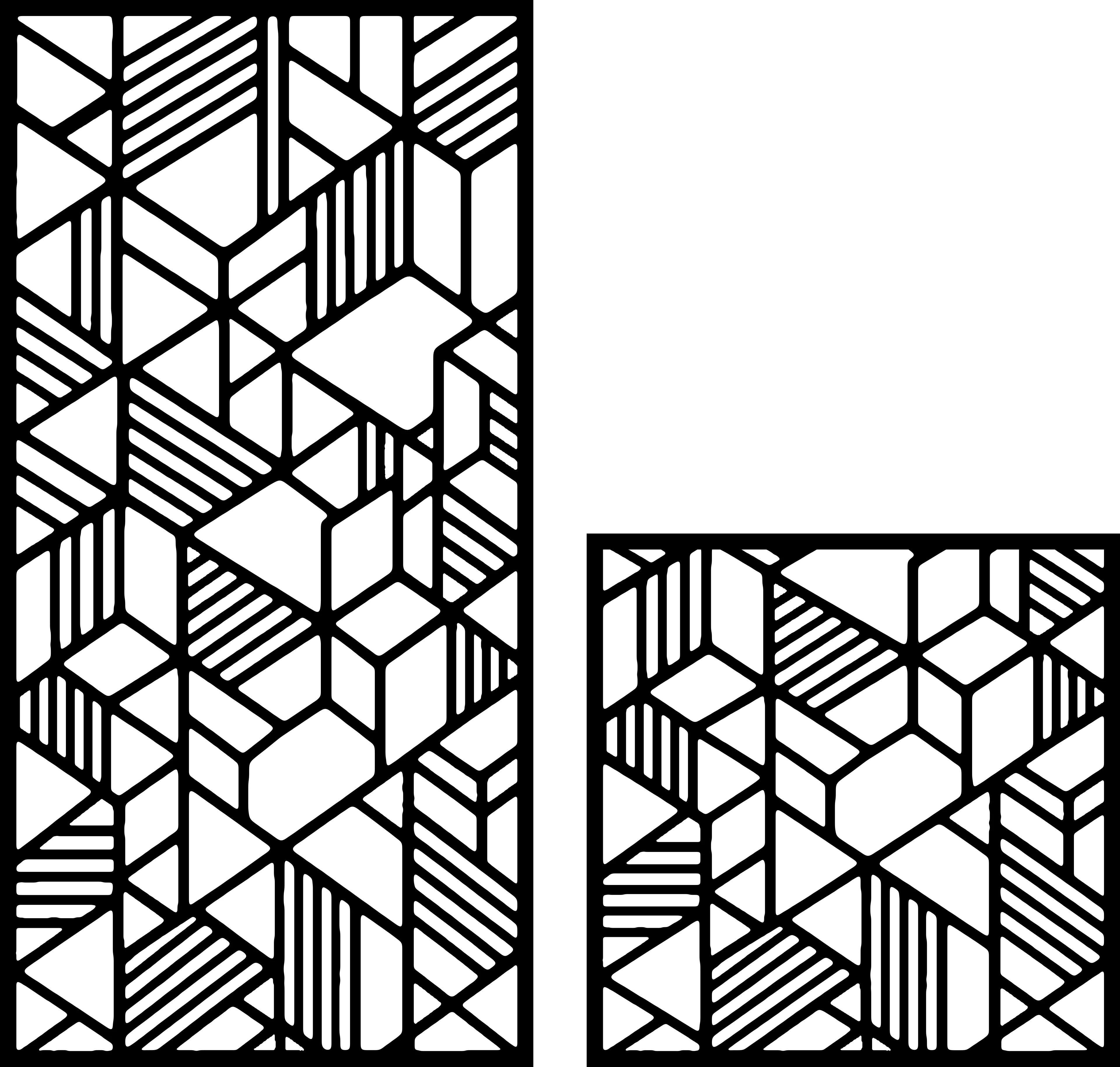
Decorative metal fence panels are one of the highest-margin custom-fab jobs you can take on — a single 2 x 1 m panel in 2 mm steel sells for $300-800 depending on the pattern and finish, and the cut itself is 20-30 minutes on a fiber laser.
The hard part is finding a design that looks intentional, cuts cleanly, and reads well from a distance. Below are the 10 DXFForge patterns we’d put on our own fence, ranked by how they perform in the field.
What makes a “good” fence panel design?
Before the list, the criteria. A fence panel design needs to:
- Have continuous, closed geometry — no stray dangling lines, no overlapping shapes. Otherwise inner pieces fall out during cutting.
- Hide / reveal balance — if it’s too open, it doesn’t act as a fence. If it’s too dense, it looks like a mesh screen.
- Tile or scale cleanly — most panels are 1 x 2 m or 1 x 1.5 m. The pattern should look complete at common dimensions.
- Cut in 2-3 mm steel quickly — single-pass on 1-2 kW fiber, well under 1 hour per panel.
Every design below ticks all four.
The list
1. GEO-15 — Triangular composition
A repeating triangle grid that creates a moiré effect from a distance. Cuts to ~30% open area which is the perfect sweet spot for “decorative but still a fence”. Tested on 2 mm stainless at 800 W / 80 mm/s, ~22 minutes per 1 x 2 m panel.
2. ABS-01 — Contemporary wall panel
Shard pattern with intentional negative space. Originally designed for indoor wall art, but at 1.5 m height it reads beautifully as a fence insert. Pairs well with vertical board fences as a corner accent panel.
3. BOT-07 — Botanical leaf pattern
Organic curves, ~25% open. Best for residential gardens — pairs with planted hedge for soft-edge transition. Run on 1.5 mm mild steel and powder-coat matte black.
4. ESP-03 — Special architectural pattern
One of our premium designs. Layered geometric tessellation, very high visual complexity for the cut time. ~28 minutes per panel but the result looks like it took 4 hours.
5. GEO-22 — Hex grid variation
The classic hex pattern, refined. The hex sizes vary slightly across the panel which makes it more interesting than uniform mesh. Good for modern industrial buildings.
6. BOT-12 — Wave / wind pattern
Linear flowing curves that look like wind on water. Reads great when uplit at night. ~20 minutes cut, ~30% open.
7. GEO-08 — Diamond infill
Tight diamond pattern with intentional gradient — diamonds get smaller toward the bottom. Creates a strong vertical line on the fence. ~25 minutes.
8. ABS-12 — Modern cutting pattern
Triangulated micro-grid with bold organic blobs interrupting it. Genuinely artistic. Premium pricing zone — clients pay $500-700 for a single panel.
9. GEO-25 — Voronoi cell pattern
Generative cell pattern, no two cuts look the same when tiled. Best for commercial / restaurant exterior screens.
10. ESP-07 — Vintage iron-work inspired
Looks like wrought iron at first glance but cuts in seconds on fiber. Great for traditional homes wanting a modern reproduction look.
Setup tips
For all of the above, our recommended starting parameters on 2 mm mild steel:
- Power: 800 – 1000 W
- Speed: 60 – 80 mm/s
- Assist gas: Air at 8 bar (cheapest, fine for non-visible-edge work) or O2 at 0.8 bar (clean visible edges, slightly more expensive)
- Kerf comp: 0.05 mm inward on inner cuts, 0.05 mm outward on outer profile
For 1.5 mm stainless:
- Power: 600 – 800 W
- Speed: 80 – 100 mm/s
- N2 assist at 12 bar for that mirror-finish edge
Common mistakes on first fence panel
- Scaling DXF by eye in CAD — always type the exact dimension. Scaling visually leads to weird non-tileable sizes.
- Cutting before frame is fab’d — measure your frame first, scale the DXF to fit minus 10 mm margin all around. Otherwise the panel won’t sit properly.
- Skipping the dry run — even with our pre-tested files, run an air-pass first to make sure the head clears the bed before lighting it up.
- Not letting steel cool before unloading — small inner cuts can shift if you grab the panel while it’s still warm. Wait 2 minutes.
What this looks like in $
Practical example using ABS-01 at 1.8 x 0.9 m fence panel:
- Material: 2 mm mild steel sheet, ~$60-80 cost
- Cut time: ~25 min on 1 kW fiber
- Powder coating: ~$50 per panel (outsourced) or $20 in-house
- Retail in US/UK/EU market: $450-650 per panel
- Margin: $300-500 per piece
You only need to sell a few panels to pay for the design file + powder-coat queue.
Get the bundle
The full bundle includes all 10 above plus 67 others. One-time $49.99, lifetime access, every new design we release goes in automatically.
If you want to start with one to test your machine and process, GEO-15 is the safest “easy clean cut” file — start there, then expand.
Designs mentioned in this article


More articles
House Signs
10 Best DXF Designs for Modern House Signs & Address Plaques
Curated list of the 10 best DXF designs for house signs and address number plaques. Modern styles, material recommendations, install tips. Ready to cut on fiber laser or plasma.
June 8, 2026
Wall Clocks
10 Best DXF Designs for Metal Wall Clocks (Laser & Plasma Cut)
Discover the 10 best DXF wall clock designs for laser and plasma cutting, plus motor sizing, hole specs, and material tips to sell them fast.
August 27, 2026
Business
15 Profitable Laser Cutting Business Ideas for 2026 (With Margins)
Real laser cutting business ideas you can start this year — with realistic margins, startup costs, and which DXF designs to use. From home-shop side hustles to scaled production.
May 28, 2026