Garden Screen
7 Best DXF Designs for Garden Privacy Screens in 2026
Curated list of the 7 best DXF designs for garden privacy screens — kerf-aware geometry, tested on plasma & fiber laser, ready to cut. With install tips for Corten, stainless and mild steel.
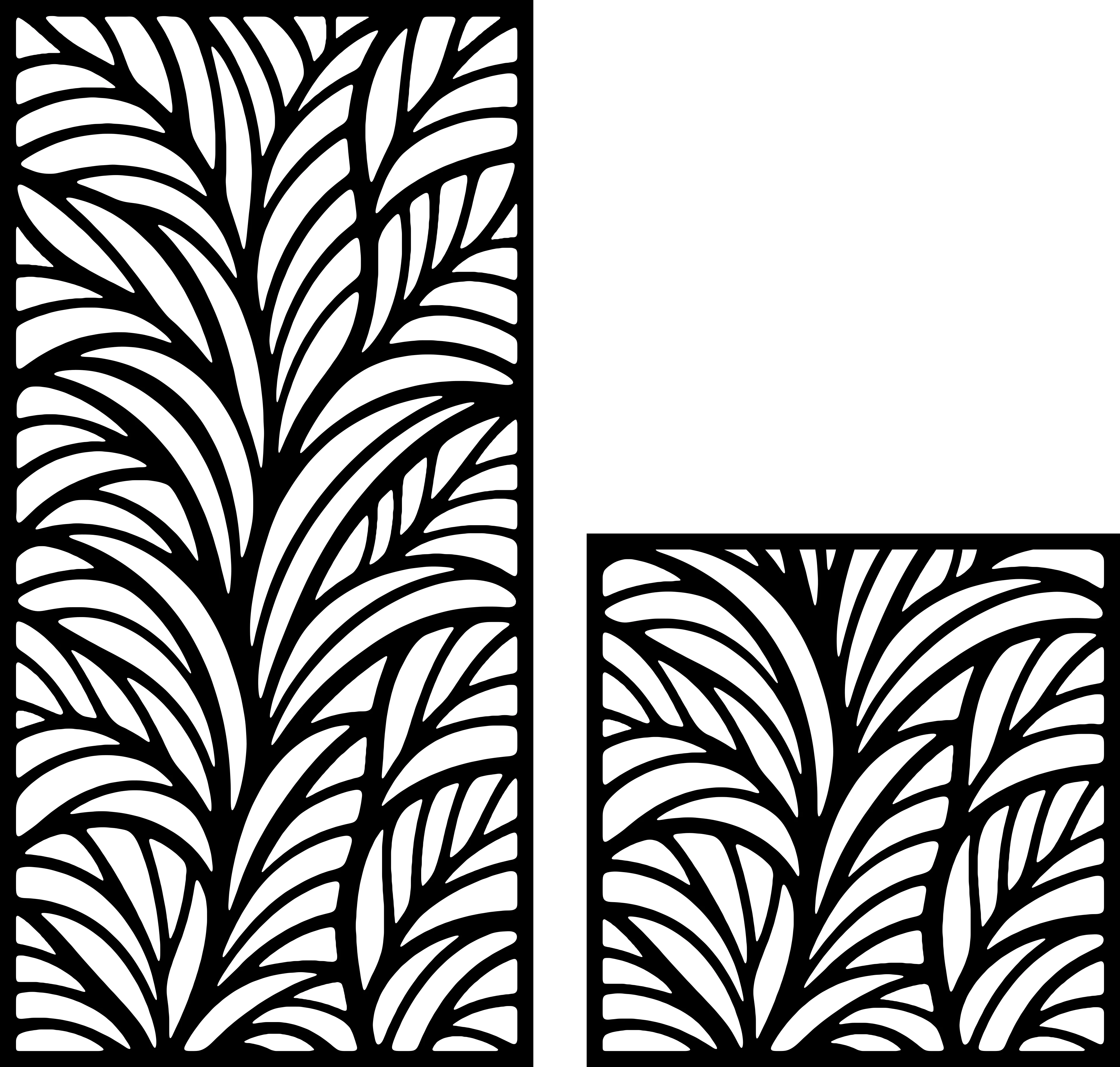
A great garden privacy screen does two jobs at once: it blocks the view you don’t want, and it becomes the focal point you actually want. The trick is the design — a kerf-aware DXF cut from quality steel reads as architectural; a generic file traced from a stock photo reads as cheap.
This guide is the practical short-list of the 7 best privacy-screen designs in the DXFForge catalogue for 2026. Each one has been cut on real machines, tested at multiple sizes, and refined until it cuts cleanly the first time. We’ll cover what makes each design work, recommended material + size, and install tips.
What makes a great privacy screen design?
Before diving into the list, the 5 things that separate a great screen from a frustrating one:
- Bridged geometry. Internal cuts need structural bridges so the panel doesn’t collapse during cutting. Designs without bridges look pretty in the file viewer and become spaghetti on the cutting bed.
- Kerf-aware spacing. Internal slots should be no thinner than ~5 mm at 1 mm steel (and proportionally wider for thicker material). Tight slots burn into each other.
- Single-pass cut paths. Continuous closed loops cut faster, cleaner, and don’t leave stray dross.
- Scalability. Should look balanced at 600 mm wide AND at 1500 mm wide. Many designs only work at one specific size.
- Weather-friendly design language. Tight intricate patterns clog with debris outdoors. Best garden screens have generous negative space (~40-60% open area).
Every design below ticks all 5 boxes.
1. Foliage Screen 09 — best for natural look
Style: Botanical, organic Material recommendation: 3 mm Corten weathering steel or powder-coated mild steel Suggested size: 1200 × 600 mm Open area: ~50%
Hand-drawn leaf and vine composition that reads as natural foliage from a distance and architectural cutwork up close. The bridged geometry means it stays rigid even at full-panel size without backing frame.
Pairs beautifully with: planted hedges, climbing roses, modern wooden decks.
2. Botanical Wall Panel 15 — best for vertical gardens
Style: Botanical, flowing Material recommendation: 2 mm stainless steel or aluminium Suggested size: 900 × 1800 mm (tall format) Open area: ~45%
Tall vertical motif designed for the kind of garden walls where you mount climbing plants. The negative space follows the natural growth pattern, so climbers fill in the design over a season.
Pairs beautifully with: jasmine, clematis, climbing hydrangea.
3. Modular Pattern 05 — best for repeating modules
Style: Geometric, repeating Material recommendation: 3-6 mm mild steel Suggested size: 600 × 600 mm tiles (combine 2-4 for full screen) Open area: ~55%
Modular tile design that lets you build screens of any width by chaining identical 600 mm modules. Great for budget-conscious installs (cut 4 small tiles instead of one massive panel) and easy transport.
Pairs beautifully with: minimalist gardens, Japanese-inspired courtyards, concrete patios.
4. Wrought-Iron Style Panel 03 — best for traditional homes
Style: Special, ornamental Material recommendation: 3 mm mild steel, hot-dip galvanised then painted Suggested size: 800 × 1800 mm Open area: ~35%
Wrought-iron-inspired ornamental panel that bridges modern fabrication with traditional aesthetics. Cuts in 1/10th the time of forged ironwork at 1/20th the cost.
Pairs beautifully with: heritage homes, stucco walls, stone columns.
5. Geometric Composition 28 — best for modern minimalist
Style: Geometric, minimalist Material recommendation: 4 mm Corten or brushed stainless Suggested size: 1000 × 1800 mm Open area: ~50%
Clean geometric repeats with mathematical symmetry — the kind of design that catches afternoon light and throws geometric shadows on whatever’s behind it. Looks more expensive than it costs.
Pairs beautifully with: glass-walled extensions, mid-century modern homes, minimalist Scandinavian exteriors.
6. Abstract Privacy Screen 14 — best for organic abstraction
Style: Abstract, sculptural Material recommendation: 2 mm aluminium with anodised finish Suggested size: 1200 × 1800 mm Open area: ~40%
Sculpted organic abstract that doesn’t repeat — it flows. Best for installs where you want the design to be a statement piece, not background pattern.
Pairs beautifully with: contemporary art collectors, designer landscaping, boutique hotel courtyards.
7. Triangulated Design 07 — best for architectural drama
Style: Abstract triangulated Material recommendation: 3 mm mild steel, powder-coated black Suggested size: 1500 × 1800 mm (oversized) Open area: ~45%
Triangulated geometric design that reads as origami crossed with structural engineering. Works as full-height privacy + dramatic visual at the same time.
Pairs beautifully with: modern architect-designed homes, brutalist exterior styling, contemporary commercial entrances.
Material & finishing guide
For all the designs above, here’s the quick decision tree on material:
Mild steel + powder coat (black, bronze, dark green)
- Cheapest option ($)
- Lifespan: 8-15 years outdoors with quality powder coat
- Best for: modern + contemporary aesthetics
Corten weathering steel
- Mid-price ($$)
- Lifespan: 50+ years with no maintenance
- Best for: garden + natural + rustic-modern looks
- Warning: rust runoff stains concrete/stone in first 2 years — install with drip line below
Stainless steel (304 or 316)
- Premium ($$$)
- Lifespan: 80+ years
- Best for: coastal climates, contemporary luxury, swimming pool surrounds
Aluminium
- Light-duty ($$)
- Lifespan: 30+ years
- Best for: balcony screens, lightweight wall-mounted, places where weight matters
Installation tips (5 things)
-
Frame your edges. Even a structurally rigid design benefits from a 25 × 25 mm steel angle frame around the perimeter — gives a clean mounting surface and prevents flex.
-
Mount with isolators. Use rubber/nylon washers between the screen and the structural posts. Prevents galvanic corrosion (steel vs aluminium) and absorbs wind vibration.
-
Spaced from walls. Mount at least 50-80 mm from any wall behind it. Air gap = shadow definition + airflow + no trapped moisture.
-
Backlight for night drama. A simple LED strip behind the screen at ground level turns the design into a stunning night feature. ~$30 of LED + power supply.
-
Drainage holes if mounted to wood/concrete. Trapped water at base = rust at base = ugly failure point.
Quick comparison table
| Design | Style | Best material | Difficulty |
|---|---|---|---|
| Foliage Screen 09 | Botanical | Corten 3mm | Beginner |
| Wall Panel 15 | Botanical | Stainless 2mm | Intermediate |
| Modular 05 | Geometric | Mild steel 3-6mm | Beginner |
| Wrought-Iron 03 | Ornamental | Mild steel 3mm | Intermediate |
| Geometric 28 | Geometric | Corten/stainless 4mm | Intermediate |
| Abstract 14 | Abstract | Aluminium 2mm | Advanced |
| Triangulated 07 | Abstract | Mild steel 3mm | Intermediate |
Where to get all 7 (and 100+ more)
These designs and the rest of our catalogue are available individually at $3.99 each, or you can get every DXFForge design — current and future in the Full Access Bundle for $49.99 one-time. The math: 7 individual = $27.93. Bundle is $49.99 for 108+ designs with new releases every week.
Picked which design works for your space? Browse the full garden + outdoor category for related designs, or check the Geometric collection for symmetrical modular options.
Designs mentioned in this article


More articles
House Signs
10 Best DXF Designs for Modern House Signs & Address Plaques
Curated list of the 10 best DXF designs for house signs and address number plaques. Modern styles, material recommendations, install tips. Ready to cut on fiber laser or plasma.
June 8, 2026
Wall Clocks
10 Best DXF Designs for Metal Wall Clocks (Laser & Plasma Cut)
Discover the 10 best DXF wall clock designs for laser and plasma cutting, plus motor sizing, hole specs, and material tips to sell them fast.
August 27, 2026
Design Roundup
10 Best DXF Designs for Modern Fence Panels (Fiber Laser & Plasma)
Hand-picked DXF designs that look stunning as decorative fence inserts. Cut on fiber laser or plasma in 2-3 mm steel, no rescaling needed, ready in 30 minutes.
May 24, 2026